


I get asked this a lot. Some Muslim clients ask it in their first WhatsApp message, before they ask about price or how many sessions they’ll need. Others wait until they’re sitting in the chair at the studio in Illovo. Either way, it’s a fair question, and it deserves a straight answer rather than a sales pitch.
So here’s what I tell people. I’m not a scholar, and I won’t pretend to be. But I can explain the ruling that most people point to, why the question comes up at all, and what actually happens during SMP, so you can have a proper conversation with your imam.
The short answer
In December 2016, the European Council for Fatwa and Research is widely reported to have ruled that scalp micropigmentation is permissible. Their reasoning was that SMP treats a condition (hair loss) rather than decorating the body. On that basis, most people regard SMP as halal.
Not every scholar agrees, though. If you want a ruling for your own situation, ask someone you trust.
Why people ask in the first place
Partly it’s the name. SMP gets called a “hair tattoo”, and many scholars consider tattoos impermissible. And yes, we do use fine needles to put pigment into the skin. So it’s natural to wonder whether the same rule applies.
How it differs from a normal tattoo
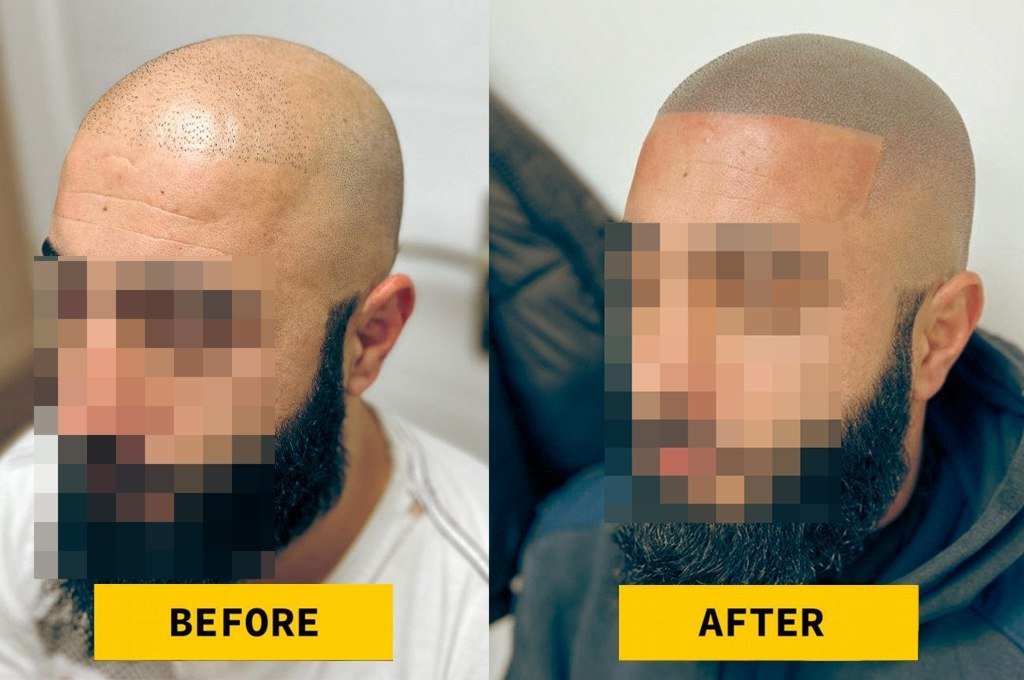
The purpose is completely different. Nobody comes to me for SMP to show off a design. They come because their hairline has gone, or their crown is thinning, or they have a scar or alopecia patch they’re tired of hiding.
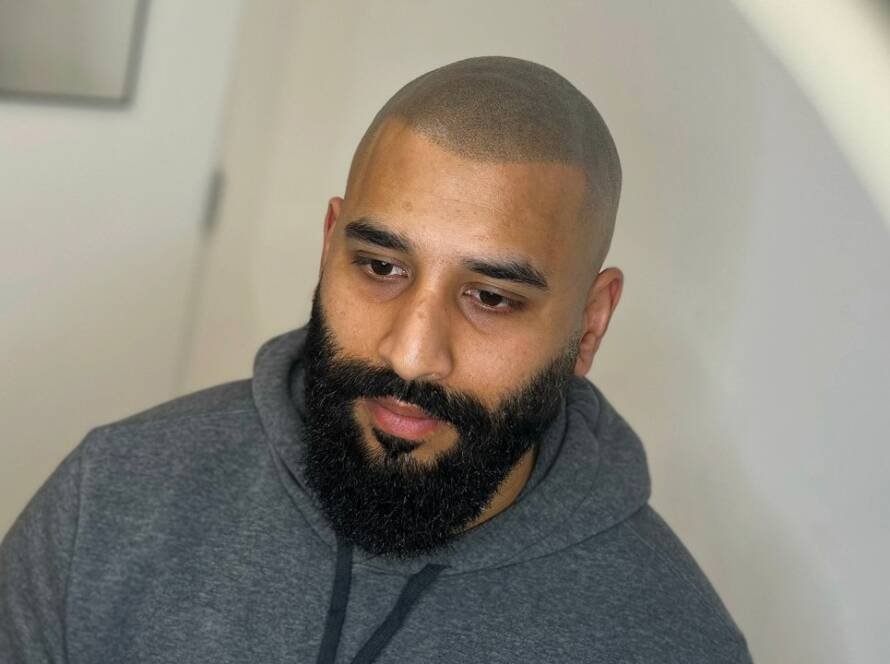
It also looks different. What I put in the skin is thousands of tiny dots, matched to your hair colour and skin tone, so they read as hair follicles. Up close it looks like a fresh buzz cut, not ink.
And it doesn’t last forever. SMP softens over time, and most clients come back for a touch-up after three to six years.
A bit more about the 2016 ruling
The European Council for Fatwa and Research is a body of Islamic scholars that issues guidance for Muslims living in Europe. The ruling treats baldness like other conditions where seeking treatment is acceptable. That’s why SMP comes out as permissible under it.
It carries weight, but it isn’t binding on every school of thought. Some scholars take a stricter line and see any pigment in the skin as tattooing. Others are comfortable with it when the reason is corrective, like hair loss, scars or alopecia.
What about wudu and ghusl?
This usually comes up next. The pigment sits inside the skin, not on top of it, so there’s no layer stopping water from reaching the scalp. For that reason it’s generally not seen as a barrier for wudu or ghusl. Again, your scholar can confirm.
If you’re still deciding
Talk to your imam, and explain that SMP is used to treat hair loss, not for decoration. If it helps, come in for a free consultation first. I’ll walk you through exactly how the treatment works, step by step, so you have the details to take back to that conversation.
There’s no pressure to book on the day. Take as long as you need.
Common questions
Is SMP haram because it’s a tattoo?
Scholars differ. The 2016 ruling attributed to the European Council for Fatwa and Research treats it as permissible because it treats hair loss. Stricter views count any pigment in the skin as tattooing.
Does SMP affect wudu?
The pigment is in the skin, not on the surface, so it’s generally not considered a barrier to water. Check with your scholar to be sure.
Can women have SMP?
Yes. For women it’s usually about making thinning hair or a widening parting look fuller, and you don’t need to shave your head. There’s more on our SMP for women page.
Get in touch
I’m Piotr Fliger, and I’ve been doing SMP for over nine years and have treated more than 1,000 clients. Every consultation and every session at SMP Studio in Illovo is done by me personally. Consultations are free, either at the studio or on a video call.
WhatsApp me on 065 817 5505, have a look at our prices, or browse the FAQ for other common questions.

2 Comments