


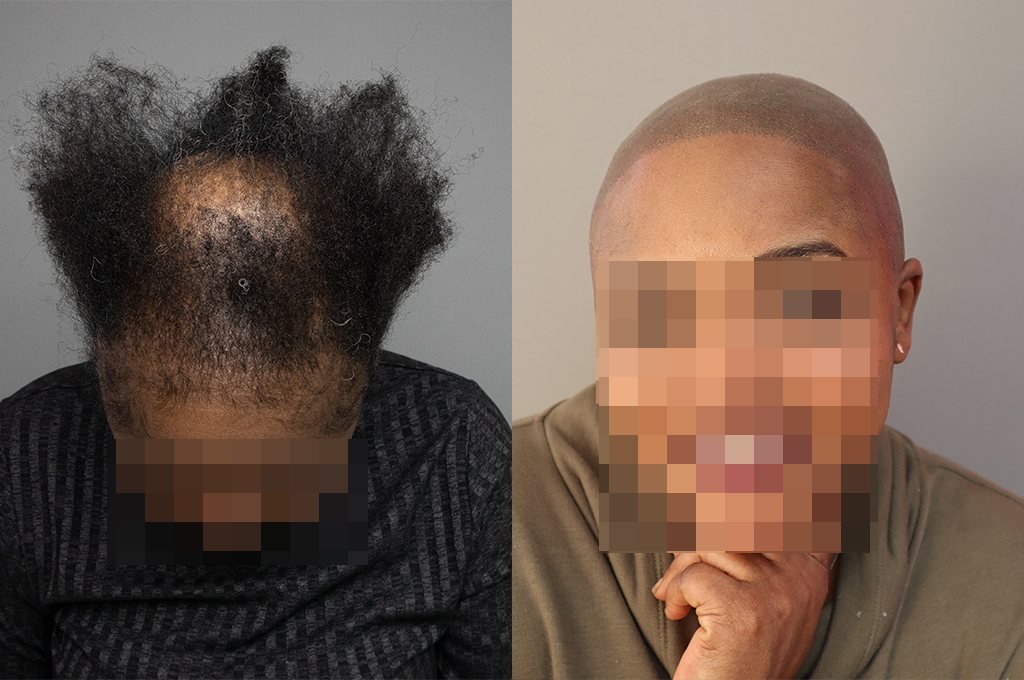
Alopecia areata can appear almost overnight: a smooth, round bald patch where there was hair a week ago. For many people it’s a real shock, and the uncertainty of whether it will spread or grow back can be stressful. Scalp micropigmentation (SMP) gives you a way to take back control of how your hair looks.
I’m Piotr Fliger, an SMP specialist in Johannesburg. At SMP Studio we treat both alopecia areata and traction alopecia, and this guide explains the condition and how SMP can help.
What is alopecia areata?
Alopecia areata is a condition where the immune system attacks the hair follicles, causing hair to fall out in patches. As DermNet explains, it usually shows up as round or oval bald patches on the scalp, though it can affect hair anywhere on the body. DermNet puts the lifetime risk at about 2%, so it’s more common than many people think.
There are different forms. Some people have one or two small patches; others have larger areas. In alopecia totalis, all the hair on the scalp is lost, and in alopecia universalis, hair is lost from the whole body. The US National Institute of Arthritis and Musculoskeletal and Skin Diseases has a helpful overview of the condition and treatment options.
See a doctor first
If you’ve noticed sudden patchy hair loss, see a doctor or dermatologist to confirm the diagnosis. There are medical treatments that help some people regrow hair, and it’s worth knowing your options. SMP works alongside medical treatment; it’s not a replacement for it.
How SMP helps with alopecia areata
SMP recreates the look of hair follicles using tiny pigment impressions, matched to your hair colour and skin tone. For alopecia areata, it can:
- Camouflage patches so they blend in with the hair around them, especially if you keep your hair short.
- Create a complete, even shaved look across the whole scalp if you have alopecia totalis or extensive hair loss.
- Give you back a hairline if you’ve lost your hair at the front.
A study in the Journal of Clinical and Aesthetic Dermatology lists people with refractory alopecia areata and alopecia totalis among those who can benefit from SMP (Rassman et al., 2015).
What if my patches change?
That’s one of the most common questions I get. If your hair regrows in a treated area, the pigment simply sits underneath the hair and isn’t noticeable. If new patches appear, we can treat those areas in a touch-up session. At your consultation, we’ll talk through how stable your alopecia has been and plan the best approach together.
What does SMP for alopecia cost?
Alopecia varies a lot from person to person, so I quote after a free assessment. Most clients need 2–3 sessions of 2–4 hours. See the price guide.
Common questions
Can SMP cure alopecia areata?
No. SMP doesn’t change the condition itself, but it makes patches and bald areas look like a full, closely shaved head.
Is SMP safe if I have alopecia areata?
SMP is non-surgical and very commonly used for alopecia. If your scalp is inflamed or you’re in an active flare, we may suggest waiting until it settles. Check with your doctor if you’re unsure.
Can women with alopecia have SMP?
Yes. See SMP for women.
How long does SMP last?
Usually 3–6 years before a quick touch-up.
Book a free, private consultation
SMP Studio is in Illovo, Johannesburg, near Sandton and about 30 minutes from Pretoria. I do every consultation and session myself. Book a free consultation at the studio or by video call, or WhatsApp photos of your scalp to 065 817 5505. You can also read about traction alopecia or see our before and after results.


1 Comment