

SMP After Hair Transplant in Johannesburg
Had a Hair Transplant but Still Seeing Too Much Scalp?
A hair transplant can restore natural hair growth, but the final result does not always provide the visual density you expected. Gaps between transplanted follicles, thinning through the crown or visible scalp can remain even after a successful procedure.
At SMP STUDIO South Africa in Johannesburg, scalp micropigmentation can be used alongside existing and transplanted hair to reduce the contrast between the hair and scalp, creating the appearance of a fuller, denser result. SMP can also be used to camouflage visible FUE and FUT hair transplant scars, helping them blend more naturally with the surrounding scalp.

Why Can Hair Still Look Thin After a Hair Transplant?
A hair transplant redistributes your existing donor hair into areas affected by hair loss. While transplanted follicles can provide permanent natural hair growth, the number of available grafts is limited.
This means that even after a successful transplant, the density may not completely match the appearance of naturally thick hair.
This can leave areas where the scalp remains visible, particularly:
- Through the crown
- Behind the transplanted hairline
- Across the top of the scalp
- Between transplanted grafts
- Under bright or overhead lighting
- When the hair is wet or styled in certain directions
Some clients also continue to experience natural hair loss around their transplanted hair, which can make previously treated areas appear thinner over time.
Scalp micropigmentation can help reduce this visible contrast without requiring another hair transplant.
How Does SMP Improve Hair Transplant Density?
SMP does not create new hair.
Instead, tiny pigment impressions are carefully placed between your natural and transplanted follicles to replicate the appearance of hair follicles beneath the existing hair.
By reducing the colour contrast between your scalp and your hair, the scalp becomes less noticeable and the overall hair can appear fuller and more visually dense.
The treatment is customised according to your:
- Existing hair colour
- Skin tone
- Transplanted hair
- Natural hair density
- Pattern of thinning
- Hairline
- Crown pattern
The objective is not to make the scalp look tattooed. The pigment should blend subtly underneath the existing hair and complement the transplant rather than compete with it.
SMP Density After a Hair Transplant
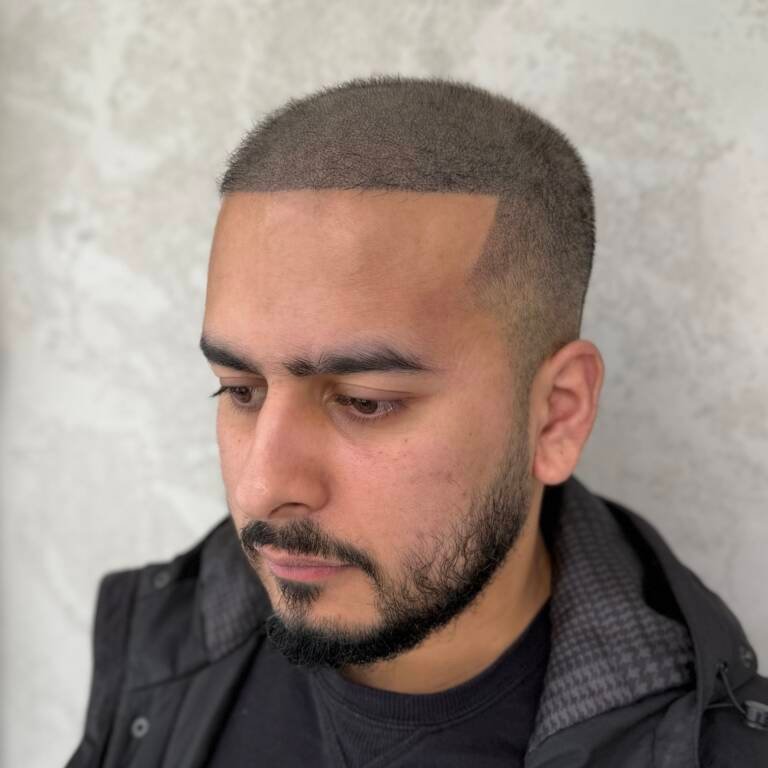
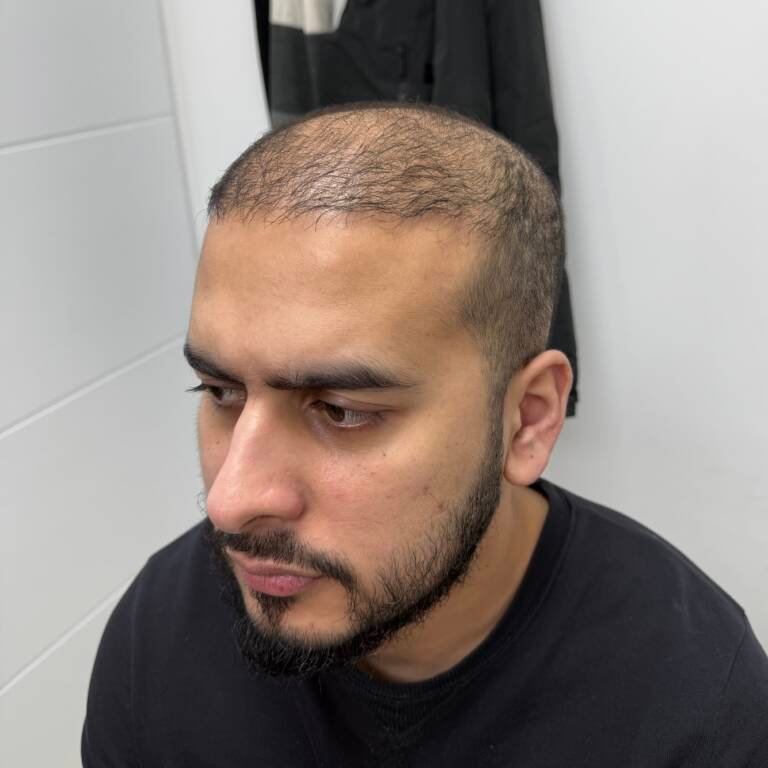
Make Existing and Transplanted Hair Appear Fuller
This is where SMP density treatment can be particularly effective.
Pigment impressions are placed strategically throughout the areas of lower density, creating a visual foundation underneath the hair.
The existing hair remains completely visible, but the contrast underneath it is reduced.
This can make a significant difference when the scalp is particularly noticeable under:
- Bright lighting
- Sunlight
- Bathroom lighting
- Photography
- Wet hair
- Short hairstyles
Rather than replacing your transplanted hair, SMP works with it
SMP for a Thinning Crown After Hair Transplant
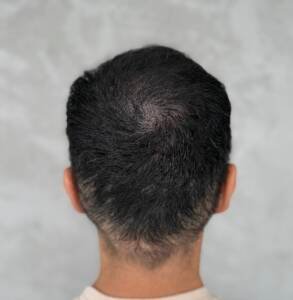
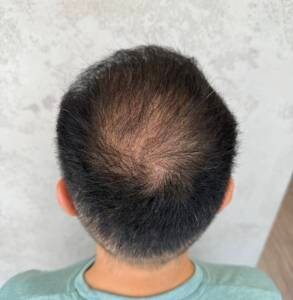
The crown can be one of the most challenging areas to achieve high density with a hair transplant. Because of the natural circular growth pattern and the size of the crown area, a significant number of grafts may be required to create strong coverage.
Some clients therefore achieve good growth after their transplant but still see scalp through the crown.
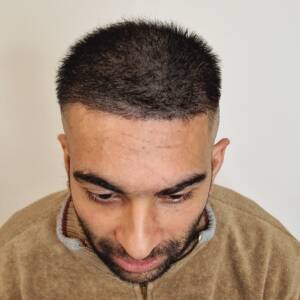
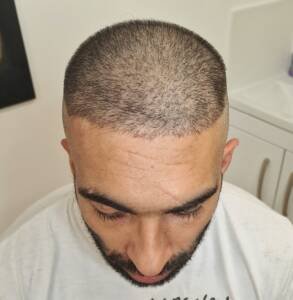
SMP can be placed between the transplanted and natural follicles to reduce this visibility while respecting the natural direction and pattern of the crown. The result is the appearance of greater density without adding additional hair.
SMP for Hair Transplant Scars
Hair transplantation can leave scars within the donor area. The type of scar generally depends on the transplant technique used.
FUE Scar Camouflage
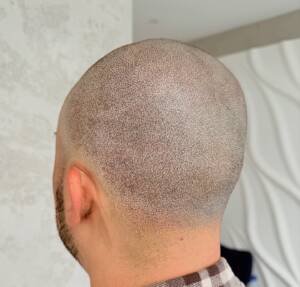
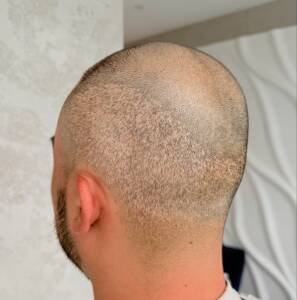
FUE procedures remove individual follicular units from the donor area, usually leaving numerous small circular scars. These can become particularly noticeable when the hair is worn very short. SMP can be used to place carefully matched pigment impressions within and around the scarred areas, helping reduce the contrast between the lighter scar tissue and the surrounding hair.
FUT Strip Scar Camouflage
FUT procedures can leave a linear scar across the donor area at the back of the head. When the hair is cut short, this scar may become visible. SMP scar camouflage can help visually break up the lighter scar line and blend it into the surrounding scalp and hair. Scar tissue behaves differently from normal skin, which is why hair transplant scar camouflage requires careful assessment and specialist SMP experience.
Can SMP Fix a Bad Hair Transplant?
SMP cannot repair damaged follicles or physically change the placement of transplanted hair. However, it can sometimes significantly improve the visual appearance of an unsatisfactory transplant.
SMP may help when there is:
- Insufficient visual density
- Visible scalp between grafts
- Uneven density
- A thin crown
- Visible FUE scarring
- A visible FUT strip scar
- Further hair loss surrounding transplanted hair
Every case needs to be assessed individually.
If the issue involves an unnatural transplanted hairline or older “plug-style” grafts, a different SMP strategy may be required.
Why Does My Hair Still Look Thin After a Hair Transplant?
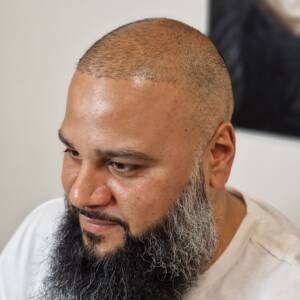
A hair transplant can restore hair to thinning or bald areas, but it doesn’t always achieve the density you were hoping for.
Even after a successful procedure, some people still notice visible scalp, particularly under bright lighting or when their hair is wet.
This can happen for several reasons:
Limited donor hair: The number of available grafts may not be enough to achieve the desired coverage.
Lower density in the crown: The crown often requires substantial coverage because of its size and natural hair-growth pattern.
Uneven coverage: Some areas may appear fuller than others.
Continued hair loss: Existing non-transplanted hair may continue thinning over time.
At SMP STUDIO Johannesburg, scalp micropigmentation can complement a hair transplant by reducing the visual contrast between the scalp and existing hair, creating the appearance of greater density without another surgical procedure.
.

How Long After a Hair Transplant Can You Have SMP?
SMP should only be performed once the scalp has properly healed from the hair transplant.
There is no single waiting period suitable for every person because healing varies according to the transplant technique, the condition of the scalp and the individual patient.
If you’ve recently undergone FUE or FUT surgery, we recommend obtaining clearance from your hair transplant surgeon before undergoing SMP.
At your SMP consultation, we will also assess the condition of the scalp before recommending treatment.

Why Choose SMP STUDIO South Africa?
Hair transplant density and scar camouflage require more than simply adding pigment to the scalp. The SMP needs to work with the client’s existing hair, previous transplant and future pattern of hair loss. At SMP STUDIO South Africa, treatments are personally performed by Peter, with:
9+ years of SMP experience
1,000+ clients treated
200+ five-star reviews
Experience treating hair transplant density, FUE scars, FUT scars, thinning hair, advanced baldness and corrective SMP cases Every treatment is individually planned rather than using a standard template.
Our Johannesburg clinic provides SMP treatments for clients from Johannesburg, Sandton, Pretoria and across South Africa.